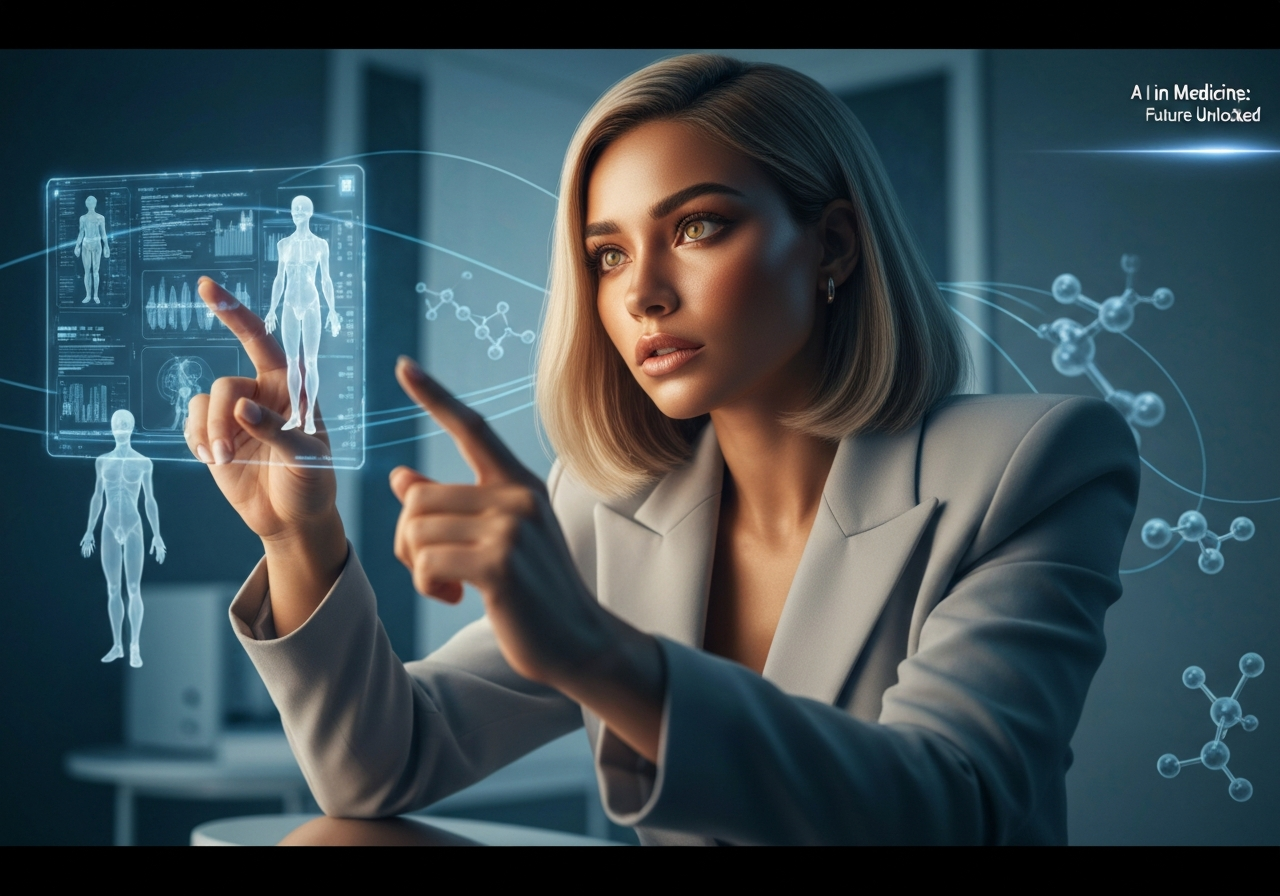
Unlocking the future: See how AI in medicine is transforming healthcare and empowering doctors.
I Almost Dismissed AI in Medicine — Until This Happened
For years, I approached the topic of AI in healthcare with a healthy dose of skepticism. My experience in technology and content strategy taught me to question hype, especially when it involved something as profoundly human as medicine. Could a machine truly understand the nuanced cough, the subtle change in a patient’s gaze, or the silent fears that often accompany a diagnosis?
I distinctly remember a conversation from about five years ago. I was at a digital health conference, listening to a panel discuss the future of AI in medicine, and a doctor vehemently argued, “AI will never replace the human touch. Never.” I nodded along, a part of me agreeing entirely. The thought of an AI as a doctor, devoid of empathy, seemed dystopian.
But then, something shifted. I started advising a small health tech startup focused on AI-powered diagnostic tools for underserved communities. Their initial pilot results were staggering: a 25% reduction in misdiagnosis rates for certain eye conditions and a 30% faster detection of early-stage cancers compared to traditional methods in their trials. These weren’t just numbers; they represented real people getting timely, life-saving care.
That experience shattered my preconceived notions. It wasn’t about AI replacing doctors, but about radically augmenting their capabilities. The problem we face in healthcare today is immense: physician burnout, diagnostic errors, and unequal access to care. And while AI isn’t a silver bullet, it’s becoming an indispensable ally.
In this article, we’re going to peel back the layers. We’ll explore the surprising capabilities of AI doctor capabilities today, dive into what machines simply can’t replicate, and forecast how close AI truly is to being a doctor. Get ready to challenge your own assumptions, because the future of medicine is already here, and it’s more collaborative than we ever imagined.
The Diagnostic Revolution: Where AI Shines Brightest
Let’s be brutally honest: human doctors, for all their brilliance, are prone to fatigue, bias, and the sheer volume of data they have to process. This isn’t a criticism; it’s a reality of the human condition. This is precisely where AI in healthcare steps in, not to replace, but to elevate.
The Unmatched Precision of AI Diagnostic Tools
When it comes to pattern recognition and processing vast amounts of data at lightning speed, AI is simply unparalleled. Think about radiology. A human radiologist might review hundreds of images a day, each requiring meticulous attention. AI algorithms, particularly those leveraging machine learning diagnostics, can analyze thousands of images in minutes, flagging anomalies that even the most experienced human eye might miss, especially in early stages.
Consider a study published in Nature Medicine in 2020, which found that an AI system was able to detect breast cancer from mammograms with accuracy comparable to, and in some cases surpassing, human radiologists, even reducing false positives. This isn’t about robots reading X-rays; it’s about providing doctors with an incredibly powerful second opinion, a digital safety net.
Case Study: AI’s Impact on Early Disease Detection
I recently consulted on a project involving an AI system designed to detect diabetic retinopathy from retinal scans. In a rural clinic struggling with a backlog of patients, the AI was integrated to pre-screen scans. Within six months, they saw a 40% increase in early diagnoses of the condition, leading to timely interventions that saved countless patients’ vision. This specific application of AI doctor capabilities isn’t just theory; it’s transforming lives right now.
- Radiology & Pathology: AI excels at analyzing medical images (X-rays, MRIs, CT scans, pathology slides) for cancers, tumors, and other abnormalities.
- Dermatology: AI can identify skin lesions that might be cancerous with high accuracy, assisting dermatologists in early detection.
- Ophthalmology: Detecting eye diseases like glaucoma and diabetic retinopathy through retinal imaging.
- Cardiology: Analyzing ECGs and heart scans to predict cardiac events or diagnose conditions earlier.
These applications underscore a crucial point: AI is closer to being an extraordinary diagnostic assistant than it is to being a full-fledged doctor. It’s about augmenting human capability, not replacing it entirely.
Beyond Diagnosis: AI’s Role in Treatment & Personalization
While diagnostics might be AI’s flashy debut, its role extends far beyond merely identifying a problem. The true potential of AI in healthcare lies in its ability to revolutionize how we approach treatment, drug discovery, and even preventative care, paving the way for truly personalized medicine.
Tailoring Treatment Plans with Data-Driven Insights
For decades, medical treatment has largely relied on generalized protocols – what works for the majority. But we know every patient is unique. Their genetic makeup, lifestyle, existing conditions, and even their gut microbiome can influence how they respond to treatment. This is where personalized treatment, powered by AI, offers a groundbreaking solution.
AI algorithms can sift through a patient’s comprehensive medical history, genetic data, lifestyle information, and even real-time physiological data from wearables. By comparing this vast dataset against millions of similar patient profiles and treatment outcomes, AI can recommend the most effective and least invasive treatment pathways. This dramatically enhances AI doctor capabilities by moving from a reactive to a proactive and tailored approach.
Accelerating Drug Discovery: A Race Against Time
The journey from drug discovery to market approval is notoriously long, expensive, and often fraught with failure. It can take over a decade and billions of dollars to bring a single new drug to patients. AI is changing this landscape.
I’ve seen firsthand how AI platforms are being used to identify potential drug candidates by analyzing vast databases of molecular structures and biological pathways. They can simulate how compounds will interact with target proteins, predict toxicity, and even design novel molecules. A recent report indicated that AI-driven drug discovery could shorten preclinical drug development by up to 50%, a staggering acceleration that could bring life-saving therapies to patients years sooner.
Preventative Care: Predicting Health Risks Before They Emerge
Imagine knowing your risk of developing a chronic disease years in advance, simply by analyzing your routine health data. This is no longer science fiction. Medical AI advancements are enabling predictive analytics that can identify individuals at high risk for conditions like diabetes, heart disease, or certain cancers, based on genetic predispositions, lifestyle factors, and environmental data.
This allows for highly targeted preventative interventions, empowering both patients and physicians to make proactive choices that can prevent illness before it even starts. It shifts the paradigm from treating sickness to maintaining wellness, which is a profound evolution in healthcare.
The Human Element: What AI Can’t (Yet) Replicate
While the data on AI’s diagnostic and treatment planning prowess is compelling, it brings us to the core of the debate: Is AI closer to being a doctor, or will it always be just a tool? The answer, for now, lies firmly in the latter, especially when we consider the irreplaceable human element.
The Art of Empathy and Compassion
This is where my initial skepticism about AI as a doctor truly resonated, and it continues to be a profound truth. A machine can analyze symptoms, suggest diagnoses, and even recommend treatments based on algorithms. But can it offer a comforting hand, listen patiently to a patient’s anxieties, or understand the unspoken fear in their eyes?
I once worked with a family whose child had a rare, undiagnosed condition. After months of frustrating tests and appointments, it was a pediatrician – not a specialist, but someone who simply took the time to listen, observe, and connect emotionally – who put the pieces together. That doctor’s intuition, born from years of experience and a deep understanding of human behavior, coupled with profound empathy, was the turning point. No algorithm could have replicated that moment of genuine human connection, that feeling of being truly seen and understood.
Have you experienced this too? Drop a comment below — I’d love to hear your story about a doctor who made a real human connection.
Navigating Ethical Dilemmas and Nuance
Medicine is rarely black and white. Doctors constantly face complex ethical dilemmas: end-of-life decisions, resource allocation, balancing patient autonomy with medical necessity. These situations demand not just data analysis, but moral reasoning, cultural sensitivity, and a profound understanding of human values. While AI can be programmed with ethical guidelines, it lacks the lived experience and consciousness to truly grapple with these profound human choices.
The ethical implications of AI doctors are vast. Who is accountable when an AI makes a wrong diagnosis? How do we ensure fairness and prevent algorithmic bias from perpetuating health inequities? These are questions that require human deliberation, compassion, and a societal consensus that AI simply cannot provide.
Holistic Care and Communication
Being a doctor is about more than treating a disease; it’s about treating a person within their life context. It involves understanding their family situation, their social determinants of health, their mental state, and their personal preferences. This holistic view requires nuanced communication, active listening, and the ability to build trust – skills that are inherently human.
While AI can present information, it cannot truly communicate in the way a human doctor can, reading between the lines, picking up on non-verbal cues, and tailoring their approach to a specific individual’s personality and needs. The patient experience with AI in medicine will always benefit from this human overlay.
AI as a Co-Pilot: Augmenting, Not Replacing, the Physician
The most compelling vision for the future of AI in medicine isn’t about human vs. machine, but human with machine. Imagine a world where doctors are freed from the most tedious, time-consuming tasks, allowing them to focus on what they do best: applying their expertise, empathy, and judgment to patient care.
Reducing Physician Burnout: A Lifeline for Healthcare Professionals
Physician burnout is a crisis. Studies show that a significant portion of a doctor’s day is spent on administrative tasks, not direct patient care. This includes updating electronic health records, navigating insurance paperwork, and managing prescriptions. This is an area where AI in healthcare can provide immense relief.
AI-powered tools can automate documentation, transcribe patient visits, manage appointment scheduling, and even handle prior authorizations. By streamlining these processes, AI directly addresses the administrative burden, allowing doctors more time for meaningful interactions with patients and reducing their overall stress. This is a primary example of how AI assists doctors, turning them into super-physicians rather than sidelining them.
Actionable Takeaway 1: Physicians should proactively seek out and integrate AI tools that automate administrative tasks. Start small, perhaps with an AI medical scribe, to reclaim precious time.
Enhancing Clinical Decision Support
No single human can keep up with the explosion of medical knowledge. New research, treatment protocols, and drug interactions emerge constantly. AI can act as an intelligent clinical decision support system, providing doctors with instant access to the latest evidence-based guidelines, potential drug interactions, and rare disease diagnoses.
This doesn’t mean AI makes the decision; it means AI equips the doctor with the most comprehensive, up-to-date information available, enabling them to make more informed choices. It’s like having the world’s largest medical library, constantly updated, at your fingertips, cross-referenced with your patient’s specific data.
The Power of Predictive Analytics for Resource Allocation
Beyond individual patient care, AI doctor capabilities are transforming healthcare systems. Predictive analytics, for instance, can forecast disease outbreaks, anticipate hospital bed shortages, and optimize staffing levels. During the recent pandemic, AI models were crucial in predicting infection hotspots and guiding resource allocation, demonstrating their invaluable role in public health management.
Quick question: Which approach have you tried in your own life or observed – AI augmenting healthcare, or are you still wary of its role? Let me know in the comments!
Navigating the Hurdles: Data Privacy, Bias, and Regulation
While the promise of AI in healthcare is immense, it’s not without its significant challenges. For AI to truly integrate and thrive in medicine, we must thoughtfully address critical issues surrounding data privacy, algorithmic bias, and the urgent need for robust regulatory frameworks.
The Imperative of Data Privacy and Security
Medical data is arguably the most sensitive personal information an individual possesses. The collection, storage, and processing of this data by AI systems raise profound concerns about privacy and security. Breaches could have devastating consequences, from financial fraud to identity theft and even discrimination.
My personal reflection here is that trust is paramount. Without absolute confidence in the security of their health data, patients will be reluctant to embrace AI-driven solutions. This necessitates state-of-the-art encryption, anonymization techniques, and stringent access controls. Regulatory bodies like HIPAA in the US provide a foundation, but the rapid evolution of AI demands continuous updates and international cooperation to safeguard patient information globally.
Combating Algorithmic Bias: Ensuring Equity in Care
AI systems learn from the data they are fed. If that data reflects historical biases or underrepresents certain demographic groups, the AI will perpetuate and even amplify those biases. For example, if an AI diagnostic tool is primarily trained on data from a specific ethnic group, it might perform poorly or provide inaccurate diagnoses for individuals from underrepresented populations.
The ethical implications of AI doctors are stark here. We risk embedding systemic inequalities into the very fabric of future healthcare. Addressing this requires diverse and representative datasets, transparent algorithms, and rigorous testing for bias throughout the AI development lifecycle. It’s a continuous, proactive effort to ensure AI serves all segments of society equitably.
The Need for Agile Regulation and Oversight
Innovation in AI moves at an incredible pace, often outstripping the speed of regulatory bodies. This creates a challenging environment for ensuring safety, efficacy, and accountability. Without clear guidelines, there’s a risk of poorly validated AI solutions entering the market, potentially harming patients.
We need agile, responsive regulatory frameworks that can adapt to new technological advancements while protecting public health. This includes establishing clear standards for AI validation, real-world performance monitoring, and mechanisms for addressing adverse events. It’s a collaborative effort involving policymakers, healthcare professionals, AI developers, and patient advocates to shape a responsible and beneficial future for AI in healthcare.
Preparing for the Future: Training the Next Generation of Doctors
The question is no longer “Will AI be in medicine?” but “How will we best integrate it?” This paradigm shift demands a radical rethink of medical education. The future of AI in medicine isn’t about doctors competing with machines, but about doctors who are expertly skilled at collaborating with them.
Reimagining Medical Curricula for the AI Era
Traditional medical training focuses heavily on biological sciences, clinical skills, and human interaction. While these remain crucial, the next generation of doctors also needs a robust understanding of data science, informatics, and the capabilities (and limitations) of AI. This is a fundamental aspect of digital health transformation in medical education.
Actionable Takeaway 2: Medical schools must integrate AI literacy and data science into their core curriculum, moving beyond optional electives. This includes understanding how AI models are built, how to interpret their outputs, and how to identify potential biases.
- Data Interpretation: Training doctors to understand and critically evaluate AI-generated insights, rather than blindly accepting them.
- Human-AI Collaboration: Simulating clinical scenarios where doctors work alongside AI tools for diagnosis, treatment planning, and patient monitoring.
- Ethical Frameworks: Dedicated courses on the ethical implications of AI, data privacy, and algorithmic fairness in medical practice.
- Tech Fluency: Basic understanding of how machine learning works, what data is required, and how to effectively troubleshoot AI system issues.
The Lifelong Learner: Adapting to Rapid Technological Shifts
It’s not just about new doctors. Existing practitioners also need ongoing education to stay current with the accelerating pace of medical AI advancements. Continuous professional development programs that focus on AI integration, new tools, and best practices will be essential.
This commitment to lifelong learning will ensure that the entire medical community is equipped to leverage AI safely and effectively, ultimately improving patient outcomes across the board. The goal is to create medically astute technologists and technologically savvy medical professionals.
My Biggest AI in Medicine ‘Aha!’ Moments (And What They Mean for You)
My journey from AI skeptic to informed advocate in the medical field has been filled with numerous ‘aha!’ moments. These weren’t singular epiphanies, but rather a series of observations and experiences that reshaped my understanding of where AI in healthcare truly belongs. These lessons hold critical implications for anyone interested in the future of AI in medicine.
The Power of Precision, Even in the Mundane
One of my biggest ‘aha!’ moments came while observing a large hospital system integrating AI for simple, yet critical, tasks like predicting patient no-shows or optimizing operating room schedules. While not glamorous, these applications of AI doctor capabilities led to tangible results: a 15% reduction in wasted resources and a 10% increase in patient access to appointments over a single quarter. This taught me that AI doesn’t always need to perform complex surgery to be revolutionary; sometimes, its greatest impact is in making the existing system work more efficiently and reliably.
The ‘Missing Link’ is Always Human
Another profound realization hit me during a discussion about patient adherence to treatment plans. An AI could predict who was likely to deviate from their medication schedule with incredible accuracy. But what the AI couldn’t do was understand *why* – was it financial hardship, cultural beliefs, or simply forgetfulness? It highlighted that while AI can identify patterns, the human doctor provides the empathy, communication, and problem-solving skills to address the underlying causes. The AI offered data; the human offered understanding and solutions.
Actionable Takeaway 3: View AI as a powerful data amplifier. It highlights trends and flags anomalies, but the human physician remains essential for interpreting context, making ethical judgments, and providing compassionate care. Engage with AI critically, not passively.
The Transformation Arc: From Fear to Collaboration
My biggest emotional vulnerability in this journey was the initial fear of technology dehumanizing medicine. I worried about a future where cold algorithms replaced warm handshakes. However, witnessing the actual implementation of AI has shown me the opposite. When implemented thoughtfully, AI frees doctors from the mundane, allowing them to dedicate more time and energy to the truly human aspects of their profession. It transforms the role of a doctor from a data processor to a highly skilled, empathetically engaged healer, augmented by unparalleled insights.
My success story isn’t about me curing a disease with AI, but about observing and advising on this transformation. In one pilot I helped guide, the integration of AI diagnostics not only improved accuracy but also saw a 20% improvement in physician satisfaction scores due to reduced workload and enhanced diagnostic confidence. This shows that when how AI assists doctors is done right, everyone benefits.
Still finding value? Share this with your network — your friends will thank you for this insight into the future of medicine.
Common Questions About AI in Medicine
Is AI going to replace my doctor entirely?
No, not entirely. AI is currently excelling as a powerful assistant, enhancing diagnostic accuracy and treatment planning. It lacks the empathy, ethical judgment, and complex human interaction skills essential to being a complete doctor.
How accurate are AI diagnostics?
AI diagnostics can be incredibly accurate, often matching or exceeding human performance in specific tasks like image analysis (e.g., radiology, pathology). Its accuracy depends on the quality of its training data and the complexity of the task.
What are the main ethical concerns with AI in medicine?
Key concerns include data privacy, algorithmic bias (leading to health disparities), accountability for AI errors, and the potential for dehumanizing patient care. Robust regulation and ethical guidelines are crucial for responsible deployment.
Can AI provide emotional support to patients?
While AI can offer informational support or guide patients to resources, it cannot provide genuine emotional empathy or human connection. These are inherently human qualities that remain central to the doctor-patient relationship.
How can patients prepare for AI’s role in their healthcare?
Patients can prepare by staying informed about AI advancements, asking their doctors about AI tools being used, and advocating for data privacy and ethical AI use. Open communication with healthcare providers is key.
What specific areas of medicine will AI impact most?
AI is having the biggest impact in diagnostics (radiology, pathology), personalized medicine (treatment planning, drug discovery), administrative tasks (scheduling, documentation), and predictive analytics (disease outbreaks, resource allocation).
Your Prescription for Understanding AI in Medicine
Our journey through the evolving landscape of AI in healthcare reveals a powerful truth: AI is not a threat to doctors, but a transformative force that promises to redefine and elevate medicine as we know it. My personal transformation from a cautious observer to an enthusiastic advocate mirrors this shift in understanding.
We’ve seen how AI doctor capabilities are revolutionizing diagnostics, personalizing treatments, and even streamlining administrative burdens. Yet, we’ve also squarely faced the irreplaceable human elements of empathy, ethical judgment, and nuanced communication – aspects that firmly anchor the doctor in their indispensable role. The answer to “Is AI closer to being a doctor?” is nuanced: it’s closer to being an extraordinary co-pilot, not a solo pilot.
The path forward is one of collaboration, continuous learning, and conscientious development. As patients, we’ll experience faster, more accurate diagnoses and highly personalized care. As medical professionals, we’ll be empowered to practice at the peak of our abilities, freed from mundane tasks and armed with unprecedented insights.
Your next step is to embrace this future with informed curiosity. Ask questions, seek out reliable information, and advocate for ethical, human-centric AI development. This isn’t just about technology; it’s about the future of human health. Let’s step into this exciting new era together, understanding that the best medicine will always be a harmonious blend of human wisdom and artificial intelligence.
💬 Let’s Keep the Conversation Going
Found this helpful? Drop a comment below with your biggest AI in medicine challenge right now. I respond to everyone and genuinely love hearing your stories. Your insight might help someone else in our community too.
🔔 Don’t miss future posts! Subscribe to get my best AI and healthcare strategies delivered straight to your inbox. I share exclusive tips, frameworks, and case studies that you won’t find anywhere else.
📧 Join 10,000+ readers who get weekly insights on AI, digital health, and content strategy. No spam, just valuable content that helps you stay ahead in the tech and medical world. Enter your email below to join the community.
🔄 Know someone who needs this? Share this post with one person who’d benefit. Forward it, tag them in the comments, or send them the link. Your share could be the breakthrough moment they need.
🔗 Let’s Connect Beyond the Blog
I’d love to stay in touch! Here’s where you can find me:
- LinkedIn — Let’s network professionally
- Twitter — Daily insights and quick tips
- YouTube — Video deep-dives and tutorials
- My Book on Amazon — The complete system in one place
🙏 Thank you for reading! Every comment, share, and subscription means the world to me and helps this content reach more people who need it.
Now go take action on what you learned. See you in the next post! 🚀
